
After a loved one passes, you may find yourself surrounded by a lifetime of belongings. A house full of furniture. A dusty coin collection. A stack of old stock certificates. Everyone asks, “What is any of this worth?”
That is the moment you need an estate valuation.
Estate valuation is the formal process of finding the fair market value of every single asset a person owned when they died. It creates a financial inventory. That inventory becomes the official record for everything that follows.
The Core Concept of Estate Valuation
Estate valuation is not guesswork about what something might sell for at a garage sale. It is a step-by-step process with clear rules.
The IRS sets the standard. Under U.S. federal tax law, fair market value is the required measure for estate tax purposes. That number must hold up to review from the IRS, from lawyers, and from family members.
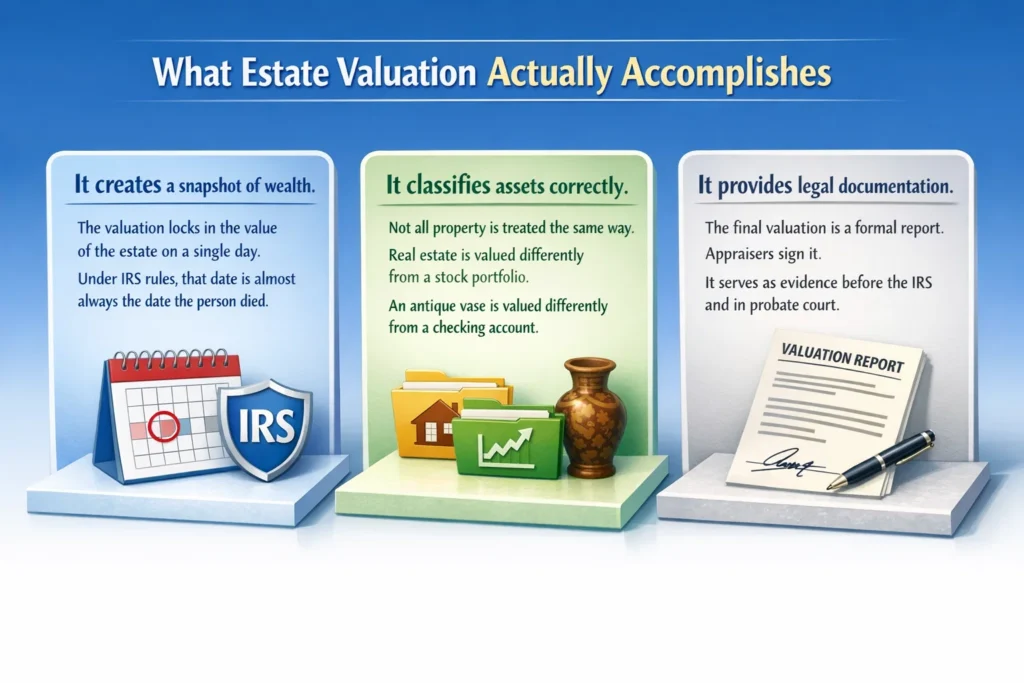
What Estate Valuation Actually Accomplishes
It creates a snapshot of wealth. The valuation locks in the value of the estate on a single day. Under IRS rules, that date is almost always the date the person died.
It classifies assets correctly. Not all property is treated the same way. Real estate is valued differently from a stock portfolio. An antique vase is valued differently from a checking account.
It provides legal documentation. The final valuation is a formal report. Appraisers sign it. It serves as evidence before the IRS and in probate court.
How Value Is Determined: Fair Market Value and Its Exceptions
In most estate valuations, fair market value is the standard. The IRS defines it as the price a willing buyer would pay a willing seller. Neither party is forced to act. Both have a reasonable understanding of the facts.
This is the default measure for the vast majority of estate assets.
That said, not every asset is valued at fair market value in every situation. Federal law carves out specific exceptions.
For example, 26 U.S. Code § 2032A allows certain farm and family business real property to be valued based on its actual use, not its highest possible market price. This “special use valuation” can lower the taxable estate for families who qualify.
There is also a practical reality to consider. When an estate needs to sell assets quickly, the price received is often lower than the fair market value. A rushed or forced sale does not reflect what a patient seller would get on the open market. Executors and heirs should know this difference before making decisions.
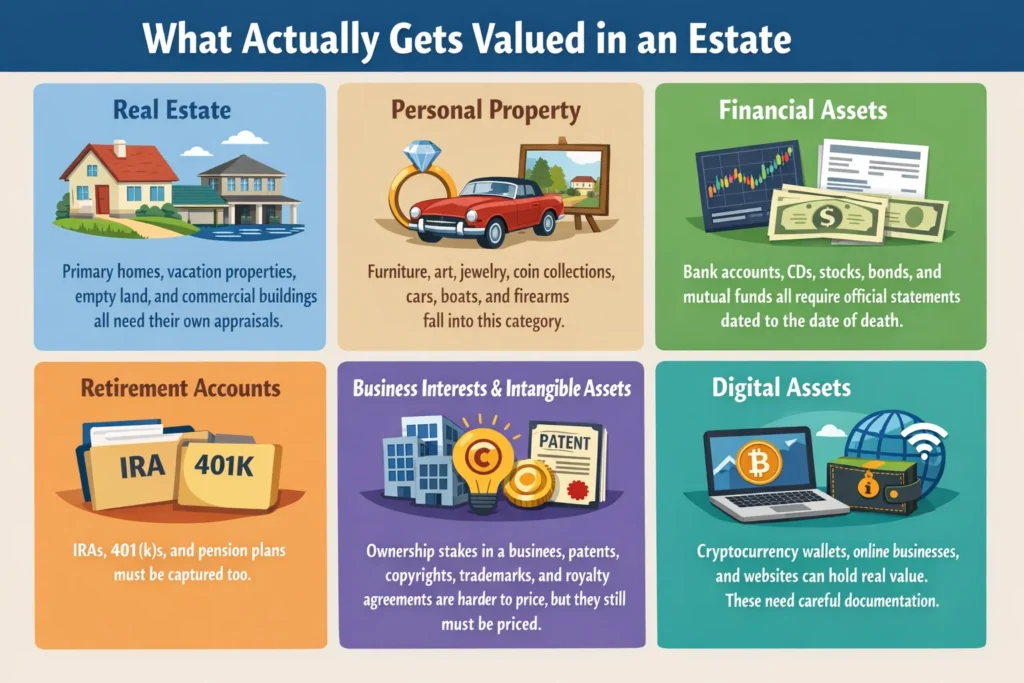
What Actually Gets Valued in an Estate
An estate includes everything a person owned or had a stake in. It is more than a house and a bank account. Every category below needs to be valued.
Real Estate. Primary homes, vacation properties, empty land, and commercial buildings all need their own appraisals.
Personal Property. Furniture, art, jewelry, coin collections, cars, boats, and firearms fall into this category.
Financial Assets. Bank accounts, CDs, stocks, bonds, and mutual funds all require official statements dated to the date of death.
Retirement Accounts. IRAs, 401(k)s, and pension plans must be captured, too.
Business Interests and Intangible Assets. Ownership stakes in a business, patents, copyrights, trademarks, and royalty agreements are harder to price, but they still must be priced.
Digital Assets. Cryptocurrency wallets, online businesses, and websites can hold real value. These need careful documentation.
How Appraisers Do Their Work
Professional appraisers follow a strict process. Every step is documented. The final report must be able to hold up if challenged legally.
The Four Phases
Phase 1—Identification. The appraiser builds a full list of assets. They confirm ownership and track down everything the person controlled.
Phase 2—Inspection and Research. For physical items, they check the condition, look for maker’s marks, and note wear and tear. For financial assets, they pull official statements and confirm balances on the date of death.
Phase 3—Analysis. The appraiser picks the right valuation method. They find comparable sales and factor in current market conditions.
Phase 4—The Report. The final document explains every conclusion. It lists sources, states the appraiser’s qualifications, and delivers a clear, defensible value.
Choosing the Right Professional
Anyone can call themselves an appraiser. That does not mean their work holds up with the IRS. You need someone with recognized credentials.
Credentials to Look For:
CVA—Certified Valuation Analyst. Issued by NACVA (National Association of Certified Valuators and Analysts). Applies to business valuation and financial consulting engagements.
ASA—Accredited Senior Appraiser. Issued by the American Society of Appraisers. Widely accepted for a broad range of asset types.
ABV—Accredited in Business Valuation. Issued by the AICPA. Applies specifically to business interests.
CAPP—Certified Appraiser of Personal Property. Issued by the International Society of Appraisers. Covers personal property like art, jewelry, and collectibles.
Appraisers without recognized credentials often miss important details. The cost of hiring a qualified professional is worth it. It helps avoid audits. It stops disputes before they start. It keeps the valuation standing.
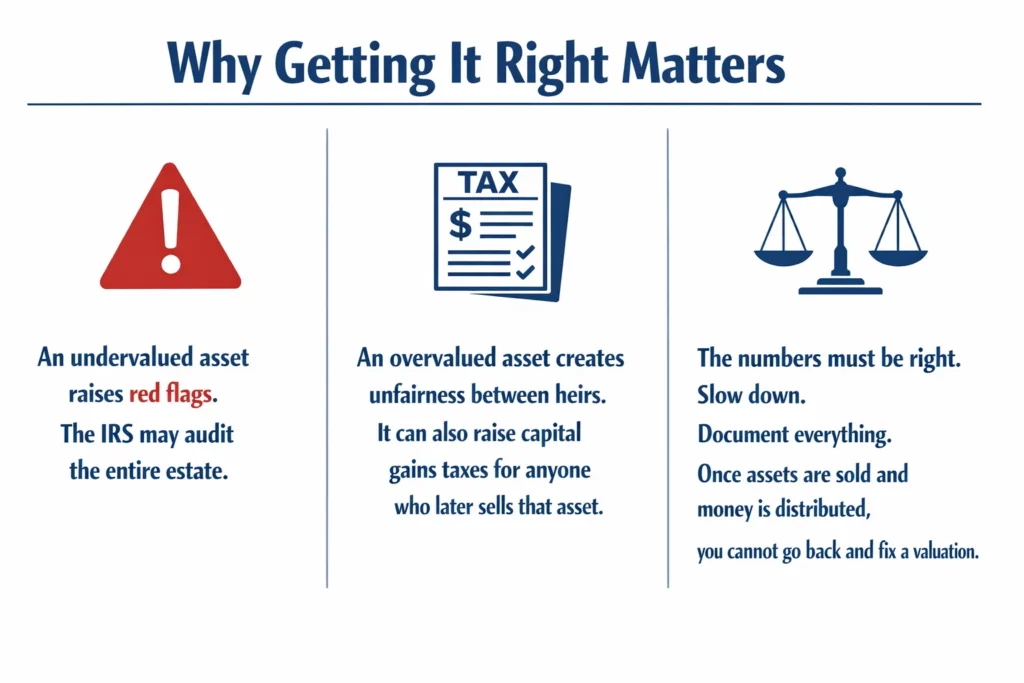
Why Getting It Right Matters
People rush. They want to clear out the house and move forward. Rushing the valuation causes lasting problems.
An undervalued asset raises red flags. The IRS may audit the entire estate.
An overvalued asset creates unfairness between heirs. It can also raise capital gains taxes for anyone who later sells that asset.
The numbers must be right. Slow down. Document everything. Once assets are sold and money is distributed, you cannot go back and fix a valuation.
Frequently Asked Questions
Can I do an estate valuation on my own? You can handle simple assets like bank accounts on your own since the balance on the date of death is easy to confirm. But for most estates, you will need a professional.
Real estate, business interests, jewelry, art, and collectibles all require a trained appraiser to produce a number the IRS will accept. A DIY valuation on these items can lead to audits, legal disputes, or unfair splits between heirs.
Who is qualified to do an estate valuation? Look for appraisers with recognized credentials such as an ASA (Accredited Senior Appraiser), ABV (Accredited in Business Valuation), or CAPP (Certified Appraiser of Personal Property).
These designations mean the appraiser has met set standards, and their work is more likely to hold up with the IRS and in court.
How long does an estate valuation take? It depends on the size and complexity of the estate. A small estate with few assets may take a couple of weeks. A larger estate with real estate, business interests, and personal property can take several weeks to a few months. Starting early helps avoid delays in probate or asset distribution.
Do all assets in an estate need to be valued? Yes. Every asset the person owned at the time of death needs to be accounted for and valued. This includes financial accounts, property, personal belongings, retirement accounts, and even digital assets like cryptocurrency. Leaving anything out can create problems with the IRS or cause disputes among heirs.
What happens if an estate is valued incorrectly? The consequences can be serious. If assets are undervalued, the IRS may audit the estate and impose penalties. If assets are overvalued, heirs may end up paying more in taxes than necessary. Either way, errors are hard to fix once assets have been sold and money has been distributed.
Getting it right the first time protects everyone involved.
Getting Professional Help
Estate valuation is complicated. The rules are strict. The stakes are high. And you are dealing with all of this while grieving.
You do not have to figure it out alone. A qualified professional turns a confusing process into a clear checklist. They know where to look. They know how to price the hard stuff. They produce reports that satisfy everyone who needs to see them.
At Bookman Capital, we specialize in exactly this. We help families build accurate, complete estate valuations. We handle complex assets. We document everything thoroughly. Ready to get a clear picture of an estate’s true worth? Contact Bookman Capital today at bookmancapital.io/contact/.
Sources: