
Estate valuation for probate creates the official dollar figure courts use to distribute a deceased person’s property. This single number determines everything from tax bills to who gets Grandma’s house. Get it wrong, and you face delays, legal fights, or personal financial loss.
This article walks you through exactly what courts require. We cover the assets you must value. We explain the methods that work. We show you the deadlines you face. Whether you are a new executor or an experienced trustee, you need this information to fulfill your legal duties.
The Hard Truth About Probate Valuations
Most executors walk into probate court thinking they just need a rough guess. They are wrong. Courts demand precision. The law requires accuracy down to the penny for some assets.
Here is what actually happens when you file an inventory. The court clerk checks every number against documentation. The probate referee questions anything that looks low. Beneficiaries hire lawyers if they suspect you undervalued something they inherited.
Getting an estate valuation for probate right means understanding what courts actually look for. Not what your uncle thinks. Not what feels fair. What the law demands.
What Courts Mean by “Value”
Courts use a specific definition. They call it fair market value. This is not what insurance would pay to replace an item. It is not what the deceased paid in 1985.
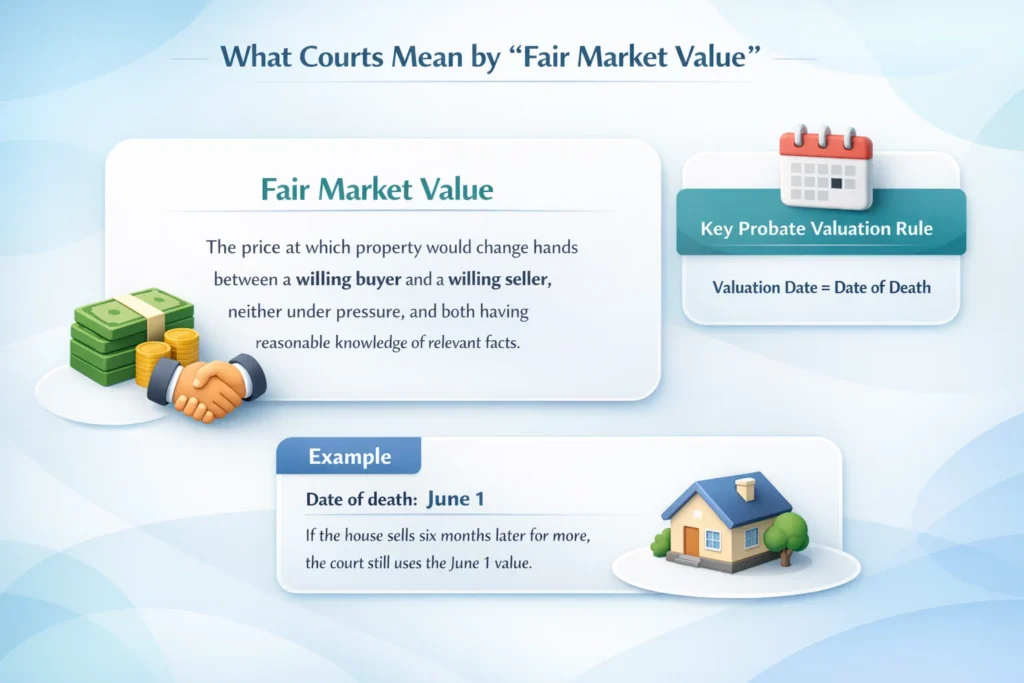
Fair market value means the price at which property would change hands between a willing buyer and a willing seller, neither being under any compulsion to buy or to sell, and both having reasonable knowledge of relevant facts. The valuation date locks in on the exact day the person died.
Consider a house. Date of death is June 1st. You sell it six months later for more money. The court still wants the June 1st value. You keep the profit for the estate, but the original valuation sets the tax basis.
Assets That Require Professional Help
Some assets need experts. Some do not. Smart executors know the difference.
| Asset Type | Valuation Method | Who Does It |
| Publicly traded stocks | Average of the daily high and low prices on the date of death | Brokerage statement + IRS calculation |
| Bank accounts | Account balance | Bank statement |
| Real estate | Comparative market analysis | Licensed appraiser |
| Jewelry over $5,000 | Gemological assessment | Certified gemologist |
| Art and antiques | Market comparables | Specialized appraiser |
| Vehicles | Private party fair market value | Kelley Blue Book (private party value) |
| Business interests | Full business valuation | Certified Valuation Analyst |
| Household contents | Fair market value estimate | Executor estimate |
The table shows a clear pattern. Liquid assets with published prices use statements. Unique assets use appraisers. Everyday items use reasonable fair market value estimates.
Why Courts Require Formal Appraisals
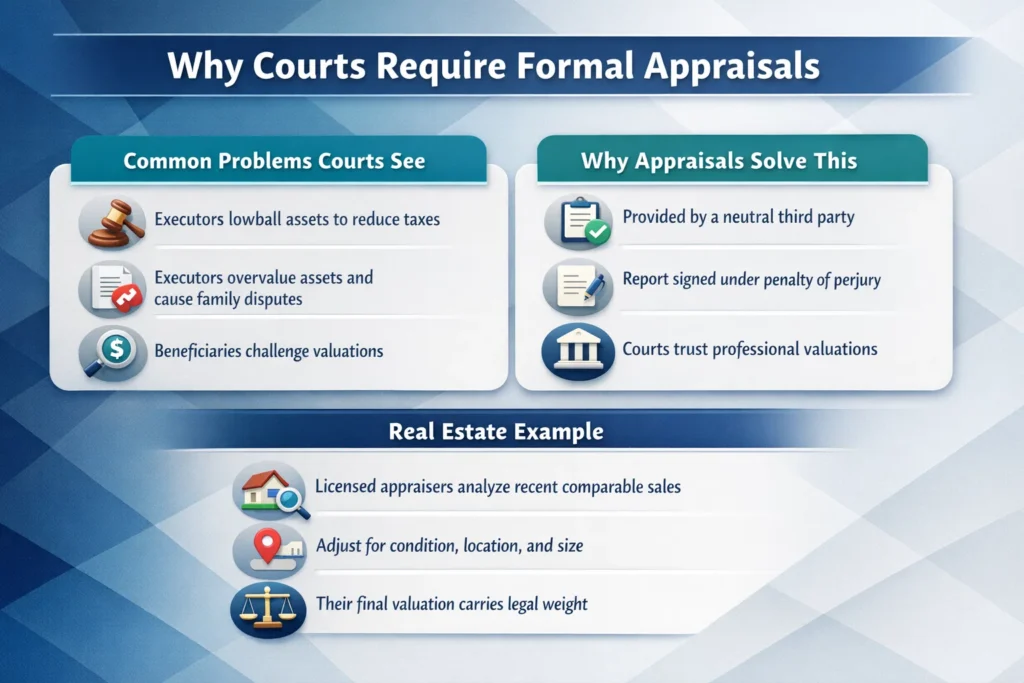
Judges see too many executors who lowball assets to save on taxes. They also see executors who overvalue things and cause family fights.
A formal appraisal solves both problems. It comes from a neutral third party. The appraiser signs a report under penalty of perjury. Courts trust this more than your best guess.
For real estate, you need a licensed appraiser who knows the local market. They pull recent sales of similar properties. They adjust for condition, location, and size. Their final number carries legal weight.
The Executor’s Legal Responsibility
You sign the inventory under oath. That means perjury charges if you lie. More commonly, it means potential personal financial liability if you fail to act in good faith and with reasonable care.
Say you negligently undervalue a painting, perhaps by skipping a professional appraisal entirely. If a beneficiary can demonstrate that you breached your fiduciary duty, a court may hold you personally liable. Good-faith valuations supported by certified appraisers provide substantial legal protection.
This is why professional estate valuation matters so much in probate matters. You need defensible numbers. Numbers that survive challenges from unhappy heirs and IRS auditors.
Personal Property: The Headache Asset Class
Furniture, clothes, books, and kitchen stuff. This category drives executors crazy. You cannot appraise every coffee mug. You also cannot ignore value.
Courts accept reasonable fair market value estimates for household contents. Walk through the house room by room. Note the major pieces. Estimate what a willing buyer would pay for those items on the open market.
For truly valuable items, pull them out separately. Grandma’s diamond ring goes to a jeweler. Dad’s coin collection goes to a dealer. The rest gets a bulk estimate.
Business Valuation Changes Everything
A business interest complicates estate valuation for probate significantly. You cannot look up a stock price. You need to value ongoing operations, goodwill, and future earnings.
Courts require a full business appraisal for any ownership interest worth fighting over. This means hiring someone who understands:
- Financial statement analysis
- Industry-specific multiples
- Discounts for lack of marketability
- Control premiums for majority stakes
For a SaaS company or tech business, the valuation gets technical fast. Recurring revenue gets treated differently from one-time sales. Customer concentration matters. Intellectual property adds value.
Executors who guess at business valuation face certain challenges. The IRS audits business valuations regularly. Beneficiaries hire their own experts to challenge low numbers. Courts throw out amateur calculations.
Debts and Liabilities Change the Picture
Gross valuation counts everything. Net valuation subtracts what the estate owes. Both matter for different reasons.
The mortgage on a house reduces its value to beneficiaries. But the house still gets listed at fair market value on the inventory. The debt shows up separately on the accounting.
This distinction confuses new executors constantly. They want to list the equity. Courts want the asset value and the debt listed separately. Two line items, not one net number.
Assets That Skip Probate Valuation
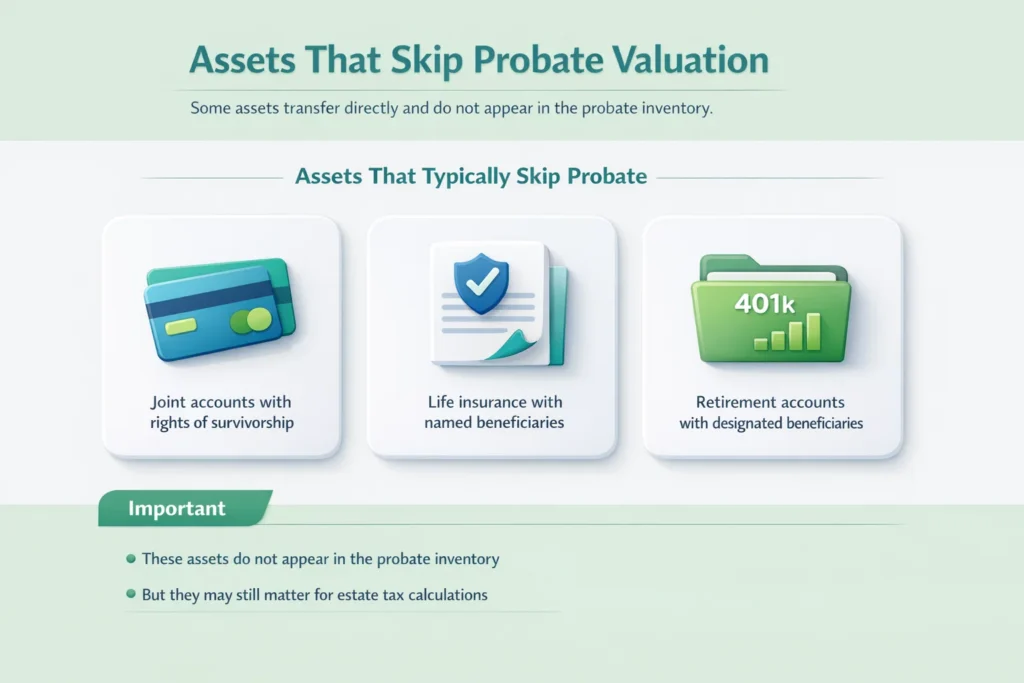
Not everything goes through probate. Some assets pass outside the will entirely. These still matter for tax purposes, but not for the court inventory.
Joint accounts with rights of survivorship go straight to the co-owner. Life insurance with named beneficiaries pays directly. Retirement accounts with designated beneficiaries transfer without probate.
Do not include these in your probate inventory. Do track them for the estate tax calculation if the estate owes federal taxes.
The Timeline Pressure
Courts set deadlines for filing inventories. Miss them, and you face penalties. Most states require the inventory within 60 to 90 days of the executor’s appointment, though some states allow up to four months or longer. Check your specific state’s probate rules immediately upon appointment.
The clock starts ticking immediately. You need appraisals done. Statements gathered. Numbers calculated. All while grieving and handling daily life.
This is why organized executors start on day one. Contact appraisers immediately. Request date-of-death statements from banks. Make lists before memories fade.
Special Situations That Change Valuations
Some estates may elect an alternate valuation date. Federal estate tax rules allow you to value assets six months after death if doing so reduces both the total estate value and the estate tax owed. This option is only available to estates that actually owe federal estate tax. Given today’s high federal exemption (over $13 million per individual), the vast majority of estates will not qualify.
You cannot pick and choose. If you use the alternate valuation date, you use it for everything. Every asset gets valued at the later date. This can help when the market declines significantly after death.
State laws vary on this. Some states require the date of death regardless. Check your local probate rules before deciding.
What Happens After You File
Filing the inventory starts another clock. Beneficiaries get time to object. The window varies by state; you can check your local probate rules for the exact timeframe. They can challenge specific values or the whole thing.
If someone objects, the court schedules a hearing. Both sides present evidence. The judge decides. This costs time and money. Good documentation prevents most objections.
Solid appraisals and clear records mean beneficiaries see the proof upfront. They may not love the numbers, but they cannot successfully fight them.
Getting an Estate Valuation for Probate Right
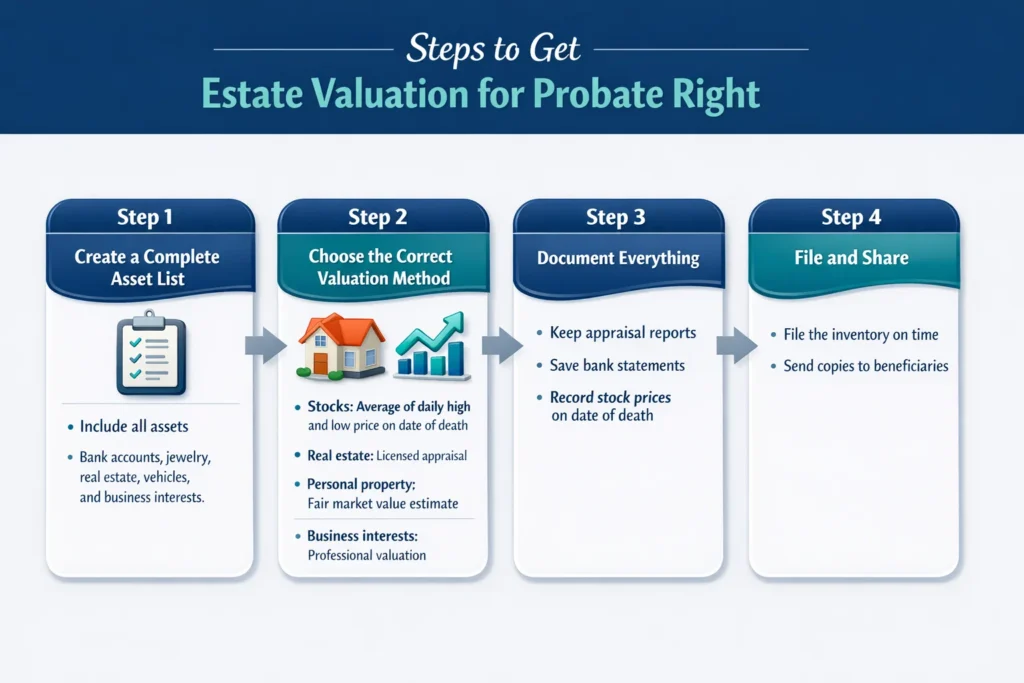
Start with a complete asset list. Leave nothing out. Small bank accounts. Old jewelry. The boat is in storage. Everything goes on the list.
Then sort by valuation method. Public stocks require the average of the daily high and low prices on the date of death and not simply the closing price. Real estate gets appraisals. Personal property gets fair market value estimates. Business interests get experts.
Document every decision. Keep appraiser reports. Print bank statements. Save records of stock price data on the date of death. Build a file that answers every possible question.
File on time. Send copies to beneficiaries. Answer their questions honestly. You control the process, or the process controls you.
When You Need Professional Valuation Help
Some assets require specialists. Do not handle these yourself. The money you save on fees disappears fast when valuations get challenged.
A Certified Valuation Analyst understands court standards. They know what judges accept. They write reports that survive scrutiny. For business interests, they are non-negotiable.
Bookman Capital specializes in business valuation for estates, particularly SaaS and technology companies. Our data-driven reports meet court standards and IRS requirements. Executors use their analysis to defend numbers against challenges. Contact Bookman Capital today for a valuation that holds up in court and protects you from liability.
Get it Right From the Start
Estate valuation for probate protects everyone involved. It gives courts the numbers they need. It tells beneficiaries what they inherit. It shields executors from personal liability.
Do the work right. Hire the experts. Keep the records. The process works when you follow the rules.
Sources:
- Internal Revenue Service (IRS) Publication 559 – “Survivors, Executors, and Administrators” — the primary IRS guide for executors covering estate administration, asset valuation standards, and tax obligations.
- American Society of Appraisers – Provides directories of accredited appraisers and publishes the valuation standards professionals follow for estate work.
- National Association of Estate Planners & Councils – Offers educational resources about the intersection of valuation, estate planning, and probate administration.